The Research Problem Every Investor Has
I am an investor as well as a consultant, and my research diet had gotten out of hand. Six investing newsletters landed in my inbox almost daily. Fifteen analyst channels I trusted were posting on their own schedule. I was checking at all hours, clicking every headline, and still walking into the open unsure what I actually believed.
And underneath the volume was a worse problem I did not want to admit. Whoever I watched last had the loudest vote in my head.
A convincing video on Tuesday could out-argue a better analyst I had read on Monday purely by being more recent. That is not research. That is recency wearing a suit, and it was picking my positions.
What My Research Diet Looked Like
- Six investing newsletters, every headline clicked, most of them saying the same thing.
- Hours of analyst video I could not keep up with, so I skipped some and felt behind on the rest.
- No record of what any analyst had predicted, so credibility was a feeling.
- The market opens at 9:30 either way.
None of that is an information problem. There was plenty of information. It is a judgment problem: which analysts count more, where do they actually agree, and who has been right before.
How The Agent Works
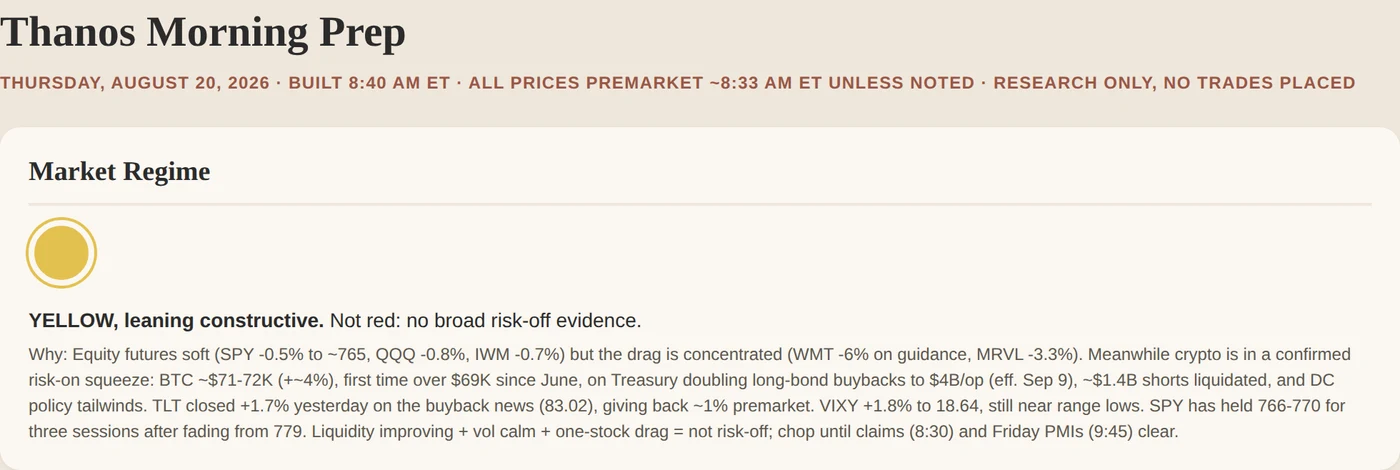
It runs on a schedule in the cloud, whether I am awake or not, and it is done before the open. Five steps, and the last three are the ones that matter.
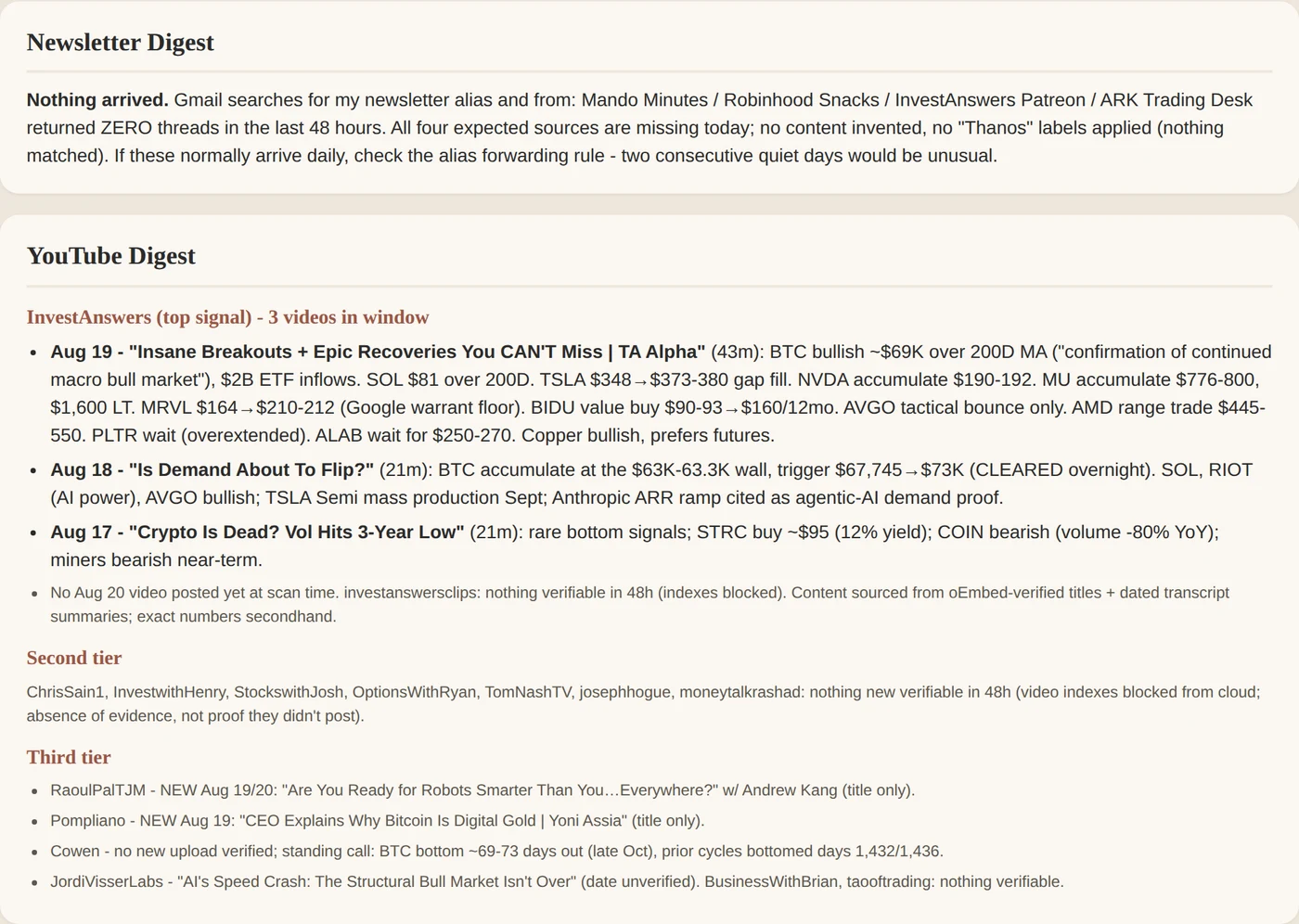
01 It reads the investing newsletters so I can stop clicking
It searches the inbox once, reads the bodies, and pulls out the tickers discussed and the stance taken, per source. Then it labels the threads so nothing gets read twice. A newsletter that did not arrive gets reported as absent rather than quietly skipped.
02 It watches the analyst videos I no longer watch
Public feeds plus transcripts, across all fifteen channels, every run. This is the part that surprised me most. Video has always been the awkward one, and it handles it well enough that I stopped watching hours of market commentary to stay current.
When a transcript is unavailable, it says so. That honesty is a design rule, not an accident: a summary of a video the system could not read is worse than a gap.
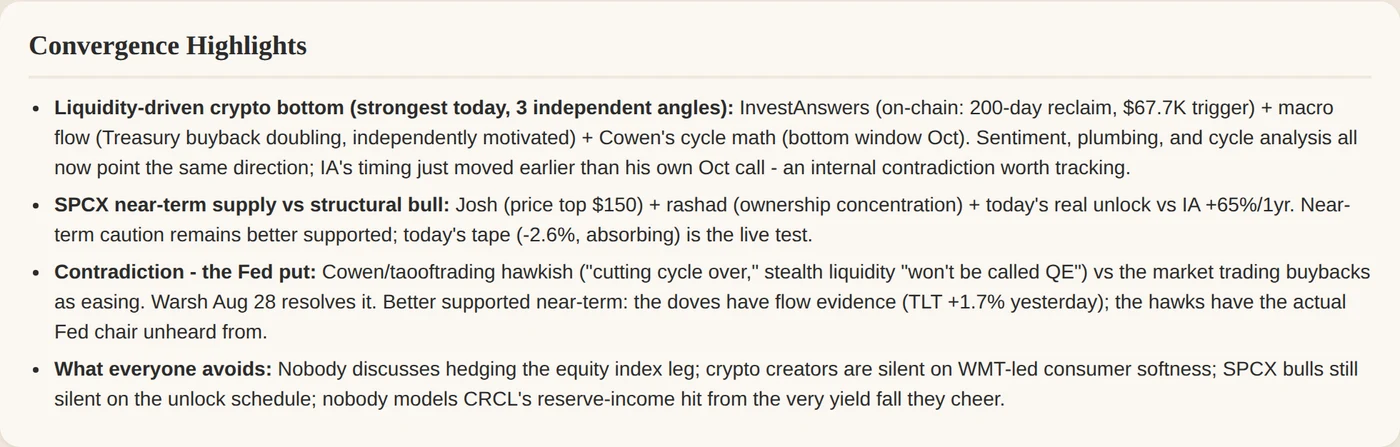
03 It looks at where the analysts agree, and why
This is the whole reason it exists. Agreement only counts when it is independent, so the agent flags where analysts reach the same conclusion by different routes, and names the route each one took. Two people repeating the same post is one data point in a costume.
On August 20 that landed on SPCX: one analyst from a price-action top, another from ownership concentration, both against my most-trusted analyst's structural call. Where credible analysts contradict each other, the agent says which side brought better support instead of averaging them into mush. Then it asks which obvious risk nobody discussed at all.
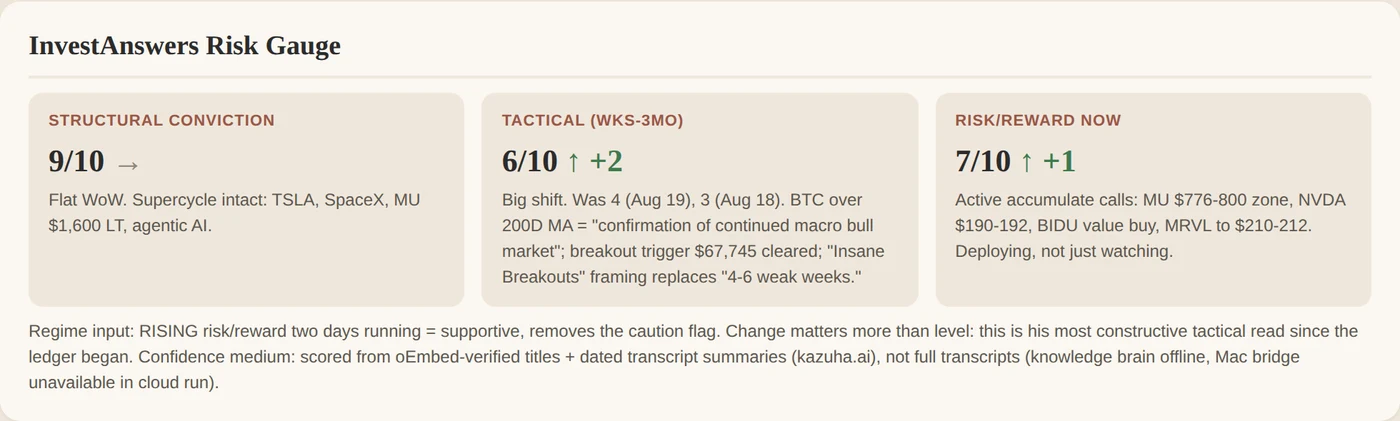
04 It scores my top analyst on three separate axes
Being right about the decade tells me nothing about this week. So my top-weighted analyst, InvestAnswers, gets scored on structural conviction, tactical outlook, and whether he is actually putting money to work right now. Week over week change matters more than the level.
05 It writes down every price call it hears
A prediction with no deadline can never be wrong, which is why most of them do not have one. Every explicit call goes to a ledger with a probability, a horizon, an analyst and a date. When the horizon arrives, the call gets graded.
That ledger is what lets an analyst move up or down a tier on evidence rather than on how convincing they sounded.
The Part That Does The Work
Most of the value is not code. It is the rules, written plainly enough that the agent can be held to them.
# Analyst tiers, and the rule that matters
Tier 1 one or two analysts. Read deepest, weighted highest, scored every run.
Tier 2 read in full, stances extracted, no scoring.
Tier 3 titles only. Enough to know a topic is live.
# Tier is reviewed against the ledger, never against how an analyst happens to sound this week.
# Convergence
- Same conclusion by DIFFERENT reasoning: name both routes.
- Same conclusion by the SAME reasoning: label it an echo.
- Contradiction: state both, judge which is better supported.
- Silence: which obvious risk went unmentioned by everyone?
From the source and convergence references inside the skill. The whole rule set is in the download.
What Changed
I stopped watching the videos. I stopped clicking six newsletters. My analysts are weighed by an explicit tier instead of by who spoke most recently, and every call they make is on the record where I can grade it later.
No claims about returns here, and none on the page it produces either. It is a research desk, not a track record, and it is locked out of placing an order on purpose. Research, not financial advice.
Get The Claude Stock Research Agent, No Charge
A templatized starter version of the same system, with everything of mine stripped out. Drop it in your Claude skills folder, point it at your own newsletters and channels, and run it.
- SKILL.md The run, in order, and the rules it cannot break
- sources.md Analyst tiers, and how a source earns or loses one
- convergence.md Independent agreement, contradiction, and the silence
- forecast-ledger.md The five fields every call carries, and how to grade it
- regime-rules.md The evidence rule that stops a risk-off call with no proof
No email, no signup. It is built around markets because that is my topic, and the tiering, convergence and ledger parts work on any subject you have too many sources on.
Who This Suits
Worth your time if you follow more analysts than you can keep up with, you invest your own money, and you would rather have written rules than a feeling about who to believe.
Skip it if you want stock picks. There are none here, and the agent is built so it cannot place a trade.
And if you would rather not build it yourself